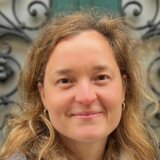
In this interview, Isabelle Obrecht, Registrar (Clinical Fellow) in General Surgery, shares her perspective on surgical training within the United Kingdom. Drawing from her experiences across different healthcare and educational environments, she reflects on autonomy, workplace culture, structured portfolio requirements and the challenges of adapting to a new healthcare system. The conversation offers valuable insight into how different training structures influence surgical development, responsibility and professional growth.
Can you briefly describe your current surgical training program (country, hospital type, year of training)?
Frimley Health NHS, Foundation Trust in Surrey, UK. It is a large NHS district general hospital and a major acute care center in England. I am currently starting my 6th year of training in general surgery.
What motivated you to pursue surgical training in your country, and what were your expectations before starting?
The opportunity to train in a different country and gain insight into another healthcare system and different approaches to medical treatment was a significant motivation. It offers a fresh perspective on the field and allowed me to grow not only professionally, but also personally.
How is your residency structured in terms of rotations, duration, and progression of responsibility?
In the UK, training begins after medical school with two years of Foundation Training (F1–F2), during which doctors rotate through different specialties every four months, regardless of whether they wish to train in medicine or surgery.
Following this, doctors apply for Core Surgical Training (CT1–2, SHO level), which is very competitive. This stage lasts at least two years, often longer, and involves rotations through various surgical specialties. The aim is to establish a solid foundation of surgical skills and broad knowledge across surgical disciplines. During this period, the MRCS (Membership of the Royal College of Surgeons) examination must be passed in order to progress.
Entry into Specialty Training in General Surgery (ST3–8, SpR level) is again highly competitive. This phase lasts six years and includes further rotations through subspecialties such as breast, colorectal, upper gastrointestinal and vascular surgery. At the end of training, trainees must pass the FRCS (Fellowship of the Royal College of Surgeons) examination. Upon completion, they are eligible to apply for consultant posts in their specialty. It is usually expected that several fellowships are undertaken before starting as a consultant.
Responsibility increases at each stage. As an F1, doctors typically accompany registrars on ward rounds and manage administrative tasks, prescriptions and day-to-day ward issues. During Core Training, SHOs continue ward duties while assisting in theatre and, with progression, begin operating as primary surgeons. As registrars, doctors independently conduct ward rounds and perform smaller procedures such as appendicectomies, abscess drainage and hernia repairs. Otherwise, they assist or operate under supervision. As training progresses, the complexity of surgeries steadily increases.
Do you feel the curriculum is clearly defined, or is there variability depending on the hospital or supervisor?
The curriculum is very well defined. For each year of training, there is a clear outline of the competencies and requirements that must be completed.
How are operative skills taught and assessed in your program?
Operative skills are taught primarily by consultants, and the approach can be quite individual, varying between supervisors. There are formal assessment tools such as DOPS (Direct Observation of Procedural Skills) for all trainees that must be completed at each stage until completing registrar level.
Are there specific case-minimum requirements or competency milestones you must achieve?
Yes, each training year has clearly defined milestones and minimum case numbers that must be achieved. In addition, the required examinations must be completed at specific stages of training.
How would you describe your weekly workload?
The workload is relatively high, with a large number of patients to review on ward rounds and regular operating theatre lists. Registrars at this hospital only rarely attend outpatient clinics. However, the workload is well structured, and tasks are rarely required to be completed simultaneously.
How present and supportive are consultants or senior surgeons during procedures and decision-making?
Consultants are very approachable and open to questions and discussion. They are generally not involved in routine daily decision-making. However, they are always present for elective operations and major emergency surgeries, where they are actively involved in teaching. During night shifts, one SHO and one registrar are on call, while the consultant remains at home but is readily available by phone.
Do you feel your program offers a safe environment to ask questions, admit errors, or seek help?
The working environment is very friendly and approachable, and I have always felt safe asking questions or seeking help. Errors are acknowledged as part of clinical practice, and there is no loss of temper when they occur. The feedback culture is supportive and well intentioned, although mistakes are not always openly discussed or acknowledged.
How much protected time do you have for teaching, simulation training, or academic work?
There is no protected teaching time during the working week; however, five days per year are allocated as study leave.
Are research or external courses encouraged or required?
Research is actively encouraged and is effectively required for applications to specialty training, as it contributes to a higher ranking in the competitive selection process.
What educational formats are used regularly, and how effective do you find them?
There are regular Morbidity and Mortality meetings, and some teams also run journal clubs. Foundation doctors have bi-weekly two-hour teaching sessions covering general medical knowledge. Multidisciplinary team meetings are usually held without trainees present.
How frequently do you receive structured feedback?
Informal feedback is often given during surgery and varies depending on the consultant. Each trainee is assigned an educational supervisor with whom they have regular meetings.
What forms of assessment are used, and do they feel fair and useful?
Assessments are conducted through the ISCP (Intercollegiate Surgical Curriculum Program), which includes tools such as DOPS and Mini-CEX. It also incorporates written consultant feedback and multisource feedback from colleagues at different levels, including nursing and administrative staff. As the process is standardised and transparent, it feels fair and objective.
How manageable is work-life balance?
Work-life balance depends largely on the rota. During on-call periods, there is often little time for activities outside of work. However, compensatory rest days for weekend and night shifts are allocated fairly, which does allow time for research and life outside work.
What support systems exist for residents facing stress or burnout?
There are several support systems available, including free counselling, coaching services and diversity support. In addition, workshops and guidance resources are offered.
How would you describe the culture among residents and consultants?
The overall culture is friendly and respectful, though somewhat distant. Resident doctors rarely socialise outside the workplace.
Do you feel your program promotes independence at the right pace?
Yes, the program promotes independence at an appropriate pace. It helps build confidence in line with the trainee’s level, and the clear structure ensures that expectations are well understood.
Have you had exposure to training in other countries? What stood out?
I have completed the majority of my training in Switzerland so far. During medical school, I spent two months in Greece as a trainee and completed a semester of study in Germany. However, I have not yet undertaken formal surgical training in any other countries.
What aspects of your program are strong compared to others internationally?
The program encourages a high level of independence in patient management and daily decision-making. I am particularly impressed by the breadth of rotations and the comprehensive exposure to surgical subspecialties in UK training. The clearly defined portfolio requirements for procedures, decision-making and research are exemplary.
Which elements could be improved by adopting features from elsewhere?
Greater involvement of foundation doctors and SHOs in ward rounds and daily decision-making would be beneficial.
What has been the most positive experience of your residency so far?
When I started my fellowship, the entire team was extremely welcoming and supportive. The consultant trusted my judgement without excessive supervision or second-guessing, which was a very positive experience.
What have been the greatest challenges?
Adapting to a different healthcare system, with familiar conditions but sometimes different management strategies, initially made me feel as though I had to relearn everything. It also takes time to understand team dynamics and workplace culture.
Additionally, practical differences such as surgical instruments, medications and antibiotic regimens have required adjustment, but they have broadened my perspective and enhanced my understanding of diverse treatment approaches.
If you could redesign one part of your training, what would it be?
Starting work in a new country and healthcare system requires a period of adjustment. A week of shadowing or structured induction, following a colleague at the same level, would have been extremely helpful. This would require a rota that better accommodates such an introduction.
Is there anything else important for an international comparison?
It is difficult to directly compare surgical trainees at the same post-graduate year across different countries, as training structures vary significantly. A clearly defined, internationally comparable framework outlining expectations at each training level could be useful.
What advice would you give to a new surgical resident in your country?
Try to gain as much exposure as possible and never hesitate to ask questions. As a UK trainee, it is essential to adhere closely to the strict portfolio requirements for your specialty and to keep them consistently up to date.