



Ageing, outpatient surgery and physician shortages increase pressure on upper extremity services in Switzerland. The interprofessional hand consultation at University Hospital Zurich delegates defined follow up tasks to therapists in advanced practice roles, while surgeons retain medical responsibility. We describe the model, first results and implications for surgical training.
Introduction
In the interprofessional hand consultation (IHSS), physiotherapists and occupational therapists with an Advanced Therapy Practice (ATP) role take over defined follow up tasks in close cooperation with hand surgeons. The model and its first evaluation have been described from the hand therapy perspective [1]. The present article addresses this new model from the surgical perspective: what it means for hand and orthopaedic surgeons, how responsibility and patient safety can be organised, and how such roles interact with surgical training. The primary aim of the IHSS is a lasting improvement in patient care through a more efficient and structured patient pathway. Closer interprofessional collaboration, attractive clinical roles for experienced therapists and relief of routine follow up workload for surgeons are additional intended effects [1].
Why musculoskeletal care needs new models
Switzerland's population is ageing. According to the Federal Statistical Office, the number of people aged 65 years or older is projected to rise from 1.8 million in 2025 to almost 2.7 million by 2055, with the fastest growth among those aged 80 years or older [2]. Many conditions treated in upper extremity surgery become more frequent with age, including thumb base osteoarthritis, Dupuytren disease, carpal tunnel syndrome, trigger finger, fragility fractures of the distal radius and degenerative disorders of the shoulder and elbow. At the same time, more upper extremity procedures are performed in the outpatient setting. Since 2019, with an extended list since 2023, selected procedures listed in the Health Care Benefits Ordinance have been reimbursed by mandatory health insurance only when performed on an outpatient basis [3], and uniform financing of inpatient and outpatient services from 2028 is likely to strengthen outpatient pathways further [4]. For surgeons, this shifts part of the organisational burden from the operating theatre to the period after discharge. Therapy, including wound care, splinting and follow up, must be coordinated early. After flexor tendon repair, for example, rehabilitation begins within the first days after surgery and follows structured protocols with close monitoring [5]. During this period, therapists often see patients more frequently than surgeons do.
The medical workforce is also under pressure. In 2025, one quarter of physicians in Switzerland were aged 60 years or older, and about 43% held a foreign diploma [6]. Part-time work is increasingly common, and residents' working hours are limited by the Labour Act [7]. More medical school places cannot provide a short-term response. A more immediate strategy is to allocate individual tasks to the professional group best qualified to perform them, while maintaining clear medical accountability for decisions that require a physician. Swiss hand therapists are well positioned to take on such responsibilities. Occupational therapists and physiotherapists are organised within a common national hand therapy society, which represents both professions and certifies hand therapists after a period of specialised clinical practice [8]. In daily practice, experienced hand therapists already perform tasks beyond the traditional therapy session, including wound care and suture removal [1].
The Swiss framework
In Switzerland, physiotherapists and occupational therapists may provide services that are reimbursed by mandatory health or accident insurance on the basis of a physician’s prescription and within the scope of services defined by the Health Care Benefits Ordinance (KLV) or the Accident Insurance Act (UVG) [1,9]. Both professions have their own tariff structures, and their services cannot be billed under medical tariffs. Within the IHSS, diagnosis, interpretation and ordering of imaging, prescriptions, medical certificates and final therapeutic decisions remain with the physicians, as defined in the institutional standard operating procedure (SOP). The advanced practice role at USZ is therefore organised as a delegated task and responsibility shift within an interprofessional pathway, not as an independent medical service.
No nationally binding statutory framework currently defines advanced practice roles or scopes of practice for occupational therapists or physiotherapists in Switzerland. The professional organisations describe advanced practice in terms of advanced clinical expertise, a master's degree and relevant professional experience [10,11]. Since 1 January 2026, outpatient medical care has been billed under TARDOC [12], whereas occupational therapy and physiotherapy follow separate tariff structures. There is currently no national tariff position for a follow up consultation delivered jointly by a physician and a therapist, as practised in the IHSS. Since 1 July 2025, a new physiotherapy tariff has applied in the accident, military and disability insurance sector, with services billed in units of five minutes [13]. It does not in itself create a tariff position for interprofessional consultations, but accident insurers, with their direct interest in a rapid return to work, are natural partners for structured evaluations.
International experience with extended roles
Terminology varies between countries. England uses the term advanced clinical practice, Australia advanced practice hand therapy, and USZ uses ATP, with the roles Advanced Practitioner Physiotherapy (APP) and Advanced Practitioner Occupational Therapy (APOT) [1,14]. Extended roles for allied health professionals are established in several health systems [14,15]. In musculoskeletal care, extended scope physiotherapists have been involved in referral triage for decades, and systematic reviews report high diagnostic agreement with medical specialists and fewer unnecessary surgical consultations in selected settings [16,17]. Economic evaluations have generally found these models to be cost neutral or potentially cost saving, although the findings depend on local organisation and scope of practice [18].
The IHSS model
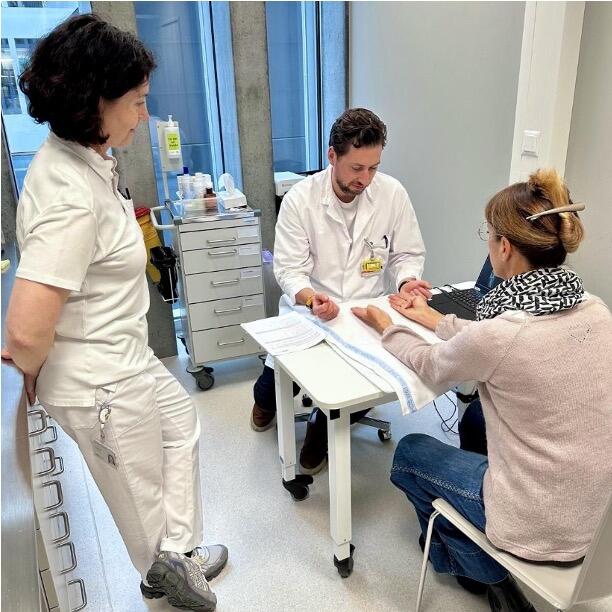
The IHSS was developed by hand therapy together with the hand surgery team of the Department of Plastic Surgery and Hand Surgery at USZ and started in September 2024 based on a comprehensive SOP [1]. The consultation takes place every Thursday at the USZ Flughafen outpatient site, in parallel with the regular hand surgery clinic. An APP or APOT works together with a hand surgeon, and triage is performed jointly. Only follow up visits are scheduled in the IHSS; patients have previously been treated in the emergency department, in the operating theatre or in a regular hand surgery clinic.
The SOP defines the qualifying diagnoses, which include flexor and extensor tendon injuries, operatively or conservatively treated fractures of the hand and wrist, joint and ligament injuries such as ulnar or radial collateral ligament lesions and PIP dislocations, and selected degenerative conditions such as trigger finger and thumb base osteoarthritis. Patients with brachial plexus injuries, complex hand and wrist injuries or an anticipated further procedure, such as Kirschner wire removal, remain in the regular hand surgery clinic. The role requires advanced clinical expertise, a master's degree (MSc, or MAS with an additional module in clinical research) and at least four years of experience in treating acute hand injuries at an employment level of at least 80% [1].
During the visit, the APP or APOT takes the history independently, examines the affected extremity and assesses hand and upper limb function. Findings and the next treatment steps are then discussed jointly with the hand surgeon and the patient. Depending on the time available, the advanced practitioner adjusts splints, teaches exercises and provides materials for compression or strength training. The consultation report is written by the APP or APOT and reviewed and approved by the hand surgeon (Table 1).
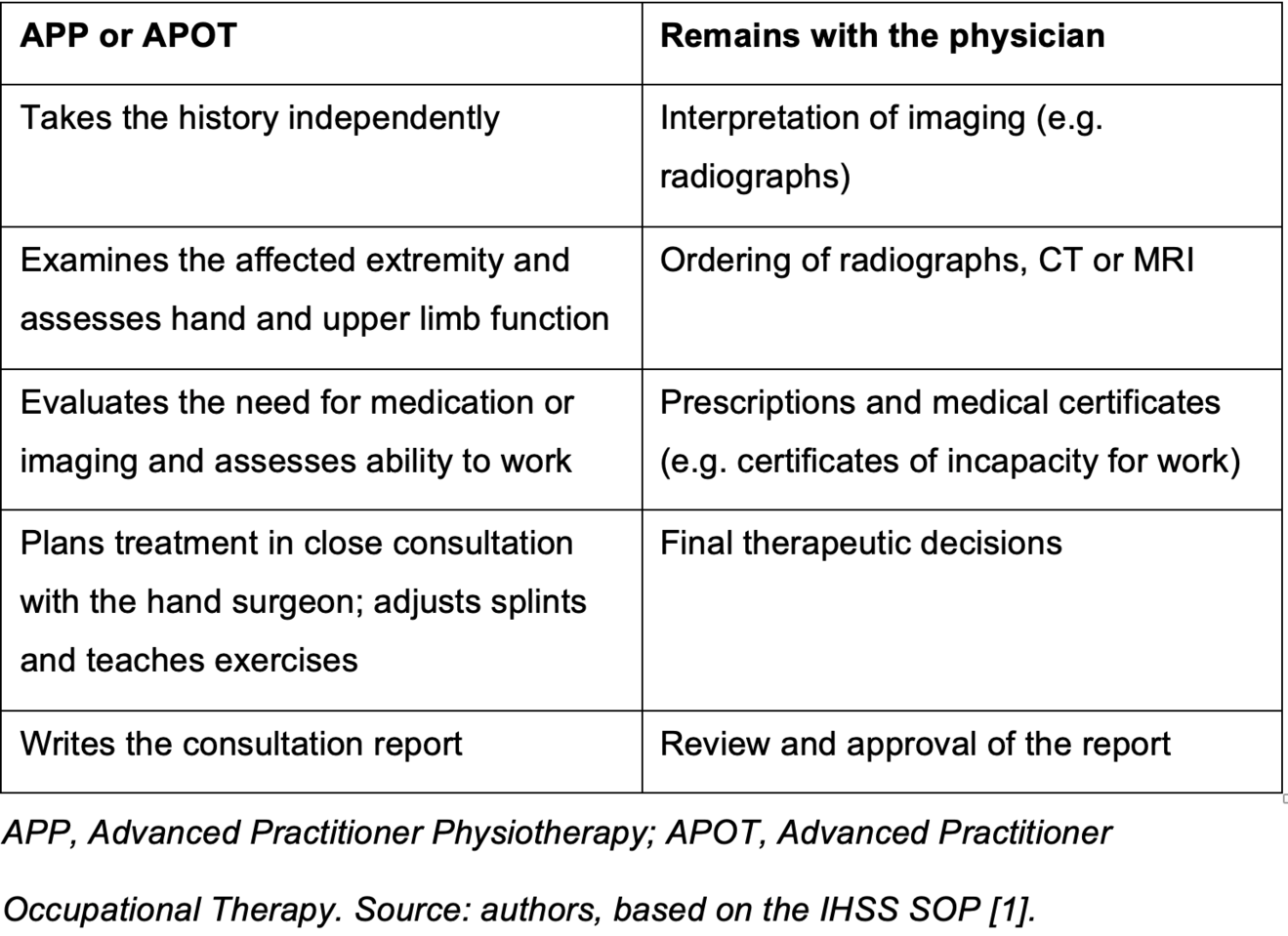
Table 1. Task and responsibility allocation in the IHSS according to the institutional standard operating procedure (SOP).
Early results of the pilot
The IHSS was evaluated retrospectively after a pilot phase of three months. The evaluation included a structured, anonymous online survey of residents and senior physicians in hand surgery and of hand therapists with and without advanced practice roles. Patient experience was assessed with patient reported experience measures (PREMs), and billing scenarios were modelled with TARDOC and the existing tariffs for occupational therapy and physiotherapy [1].
Running the IHSS in parallel with the regular clinic increased patient capacity in hand surgery by more than 20% (22% more patients seen per day), with a corresponding increase in billable medical services under TARDOC (23% per day in the model) [1,19]. The two figures differ in nature: the gain in daily capacity is an observed process measure, whereas the billing result is modelled. Hand surgeons were able to delegate standardised, less complex follow up visits; the advanced practitioners reported a better understanding of medical decisions; and all professional groups perceived the collaboration as closer and of higher quality. Patients' experience of care in the IHSS did not differ significantly from that in the regular hand surgery clinic [1]. This is notable, as much of the consultation is led by a therapist. The teams observed that patients valued the close teamwork, an easier transition into hand therapy and a familiar face; some nevertheless wished to see a physician again after a period of treatment [19,20].
The pilot demonstrates feasibility and acceptance, not equivalence of clinical outcomes. It was conducted at a single centre over a short period, and the economic analysis was partly modelled. The next step is therefore a broader evaluation with predefined clinical and process outcomes, rather than treating the initial gain in capacity as proof of superiority.
What the model means for surgeons
For hand and orthopaedic surgeons, advanced practice should be judged in terms of patient safety, patient experience, accountability, workload, cost and training. The principal safety risk of delegated follow up is failure to recognise a complication or a deviation from the expected course of recovery. Predefined selection criteria, escalation criteria and reliable availability of the surgeon are therefore essential. The IHSS addresses this through joint triage, a defined range of diagnoses, direct discussion of findings and physician review of every consultation report. For wider implementation, these elements of governance should be explicit in the SOP and open to audit. As the surgeon approves every report, medical responsibility and liability remain with the physician and the institution; delegation must therefore be documented.
Patient acceptance matters just as much. Delegated follow up is sustainable only if patients experience it as part of their surgeon's care rather than as a lesser substitute. Joint triage, a plan agreed with the surgeon and the surgeon's presence in the same clinic make this continuity visible. The wish of some patients to see a physician again can be met by medical reviews at defined points in the pathway.
Effects on the workforce must be assessed across the whole pathway. Withdrawing experienced therapists from regular therapy must not simply move waiting time from surgery to rehabilitation, and additional capacity may generate additional clinical volume rather than reduce physician demand. An evaluation should therefore measure not only surgeon time, but also therapist capacity, waiting times for therapy and the subsequent outpatient services.
The relevance for surgical training is substantial. Administrative and routine tasks already take up a considerable share of residents' working time [7]. If standardised follow up visits are handled by an advanced practitioner while the surgeon remains available for escalation, residents can spend more time in theatre, in the emergency department and in complex consultations, and can use protected training time more effectively. Instructive cases, however, should deliberately remain in the regular hand surgery clinic: task shifting should improve the learning environment, not remove educationally important cases. University hospitals and the major hand surgery centres, which carry much of the specialist training and are linked through regional training networks [21], are well placed to develop and evaluate such roles.
The same principle may extend beyond hand surgery. Standardised reviews after shoulder and elbow surgery, selected trauma pathways and some follow up after upper extremity arthroplasty could be organised around advanced physiotherapy or occupational therapy roles, provided that competencies, protocols and escalation criteria are defined [22]. International orthopaedic experience suggests that such models are feasible, but their scope must be tested locally rather than transferred unchanged from another health system [16,17]. In hand therapy, fracture clinics led by therapists and advanced practice pathways for patients awaiting surgery have also been described [23,24].
From pilot to a Swiss model
A national model should be developed jointly by surgeons and the therapy professions, not by one profession alone. The surgical societies should work with the therapist societies to help define competency standards for advanced practice roles and minimum requirements for outpatient pathways. These standards should address education, minimum clinical experience, scope of practice, documentation, escalation criteria, supervision and continuing professional development, building on international competency frameworks [15]. Tariff and legal questions should be addressed as separate but related workstreams. Accident insurers could be partners for pilots in UVG pathways. Article 59b of the Health Insurance Act (KVG) allows pilot projects that test innovative models aimed at cost containment, quality or digitalisation; however, the Federal Office of Public Health states explicitly that such pilots may not extend the benefits catalogue or admit new providers, and that tariff adjustments require negotiation between insurers and providers [25]. For nursing, the legislative route is already being taken: in April 2026 the National Council approved the inclusion of the advanced practice nurse in the Health Professions Act [26]; the Council of States has yet to decide [27]. Any future change in reimbursement or provider status for advanced therapy roles would likewise require the appropriate legal and contractual processes.
Take home messages
• Demographic change and outpatient surgery are increasing the need for structured follow up in upper extremity surgery.
• The IHSS delegates defined, standardised follow up tasks to therapists in advanced practice roles, while medical responsibility remains with the surgeon.
• In the pilot, patient capacity increased by more than 20%; these data support feasibility but do not establish equivalent or superior clinical outcomes.
• Patient experience in the IHSS was comparable to that in the regular hand surgery clinic, a central concern of all professions involved.
• Wider implementation requires defined competencies, explicit escalation criteria, systematic evaluation and appropriate reimbursement, developed jointly by surgeons and therapists.
Conclusion
For surgeons, the value of the model lies less in replacing medical work than in making better use of complementary expertise. Clear task boundaries, direct supervision from a surgeon, documented escalation criteria and continuous evaluation are prerequisites for safe implementation. With these safeguards, advanced practice roles in hand therapy performed by specialised physio- and/or occupational therapists may offer a scalable complement to surgical care and training in Switzerland.
1. Beckmann-Fries V, Schulz N, Roner S, Meier Zürcher C. Advanced Therapy Practice in der Handtherapie am Universitätsspital Zürich (USZ): die interprofessionelle Handsprechstunde (IHSS). promanu. 2026;(1):14-9.
2. Bundesamt für Statistik (BFS). Szenarien zur Bevölkerungsentwicklung der Schweiz und der Kantone 2025–2055. Neuchâtel: BFS; 2025.
3. Bundesamt für Gesundheit (BAG). Anhang 1a KLV: Einschränkung der Kostenübernahme bei stationärer Durchführung [Internet]. Bern: BAG; 2025 [cited 2026 Nov 11]. Available from: https://www.bag.admin.ch/de/anhang-1a-der-krankenpflege-leistungsverordnung-klv
4. Bundesamt für Gesundheit (BAG). Einheitliche Finanzierung der ambulanten und stationären Leistungen (EFAS) [Internet]. Bern: BAG; 2026 [cited 2026 Nov 11]. Available from: https://www.bag.admin.ch/de/einheitliche-finanzierung-der-ambulanten-und-stationaeren-leistungen-efas
5. Peters SE, Jha B, Ross M. Rehabilitation following surgery for flexor tendon injuries of the hand. Cochrane Database of Systematic Reviews. 2021 Jan 13;1(1):CD012479.
6. Verbindung der Schweizer Ärztinnen und Ärzte FMH. FMH-Ärztestatistik 2025: Ein Viertel der Ärztinnen und Ärzte ist 60+ [Internet]. Bern: FMH; 2026 Apr 15 [cited 2026 Nov 11]. Available from: https://www.fmh.ch/files/pdf33/2026-04-15-medienmitteilung-fmh-aerztestatistik_d.pdf
7. Zingg J, Uthayanan U. Positionspapier Weiterbildungsqualität statt Arbeitszeit. SWISS KNIFE [Internet]. 2024 Aug 30 [cited 2026 Nov 11]. Available from: https://www.swiss-knife.org/dossiers/forum-junge-chirurgie/positionspapier-weiterbildungsqualitaet-statt-arbeitszeit
8. Schweizerische Gesellschaft für Handrehabilitation (SGHR). Zertifizierung: allgemeine Infos [Internet]. [cited 2026 Nov 11]. Available from: https://www.sghr-ssrm.ch/de/re-zertifizierung/allgemeine-infos
9. Verordnung des EDI vom 29. September 1995 über Leistungen in der obligatorischen Krankenpflegeversicherung (Krankenpflege-Leistungsverordnung, KLV). SR 832.112.31.
10. Ergotherapeutinnen-Verband Schweiz (EVS). Advanced Practice in der Ergotherapie: Positionspapier. Bern: EVS; 2023.
11. Lüthi F, Nast I. SwissAPP: advanced physiotherapy practice. Definition [Internet]. Bern: Physioswiss; 2019 Dec 19 [cited 2026 Nov 11]. Available from: https://physioswiss.ch/be/wp-content/uploads/sites/6/2019_definition-swissapp_physioswiss.pdf
12. Bundesamt für Gesundheit (BAG). TARDOC und Ambulante Pauschalen – das neue Tarifsystem [Internet]. Bern: BAG; [cited 2026 Nov 11]. Available from: https://www.bag.admin.ch/de/tardoc-und-ambulante-pauschalen
13. Medizinaltarif-Kommission UVG (MTK). Physiotherapie ambulant: Tarifcode 311 [Internet]. [cited 2026 Nov 11]. Available from: https://www.mtk-ctm.ch/tarife/physiotherapie-ambulant
14. Stewart-Lord A, Beanlands C, Khine R, Shamah S, Sinclair N, Woods S, et al. The role and development of advanced clinical practice within allied health professions: a mixed method study. Journal of Multidisciplinary Healthcare. 2020;13:1705-15.
15. Tawiah AK, Stokes E, Wieler M, Desmeules F, Finucane L, Lewis J, et al. Developing an international competency and capability framework for advanced practice physiotherapy: a scoping review with narrative synthesis. Physiotherapy. 2024;122:3-16.
16. Desmeules F, Roy JS, MacDermid JC, Champagne F, Hinse O, Woodhouse LJ. Advanced practice physiotherapy in patients with musculoskeletal disorders: a systematic review. BMC Musculoskeletal Disorders. 2012;13:107.
17. Oakley C, Shacklady C. The clinical effectiveness of the extended-scope physiotherapist role in musculoskeletal triage: a systematic review. Musculoskeletal Care. 2015;13(4):204-21.
18. Lafrance S, Demont A, Thavorn K, Fernandes J, Santaguida C, Desmeules F. Economic evaluation of advanced practice physiotherapy models of care: a systematic review with meta-analyses. BMC Health Services Research. 2021;21(1):1214.
19. Roner S, Schulz N, Beckmann-Fries V. Interprofessional outpatient clinic with advanced practice roles in hand therapy. Presented at: FESSH/EFSHT Congress; 2026 Jun; Basel, Switzerland.
20. Schulz N, Beckmann-Fries V, Roner S. First experiences with the advanced practice role in hand therapy in Switzerland. Presented at: FESSH/EFSHT Congress; 2026 Jun 5; Basel, Switzerland.
21. Gübeli A, Wehrli L, Papaloïzos M. Weiterbildungsnetzwerke in der Handchirurgie – eine Erfolgsgeschichte. SWISS KNIFE [Internet]. 2026 Jun 8 [cited 2026 Nov 11]. Available from: https://www.swiss-knife.org/dossiers/focus/weiterbildungsnetzwerke-in-der-handchirurgie-eine-erfolgsgeschichte
22. Berner Fachhochschule (BFH). Schultersprechstunde: neue Wege mit Advanced Practice [Internet]. Bern: BFH; 2024 Oct 9 [cited 2026 Nov 11]. Available from: https://www.bfh.ch/de/aktuell/storys/2024/advanced-practice-schultersprechstunde/
23. Fournier K, Newington L, Li L, Kennedy DL. Advanced clinical practice in closed hand trauma: codevelopment of a hand therapist-led fracture clinic. Journal of Hand Therapy. 2025;38(2):189-98.
24. Cox R, Laracy S, Glasgow C, Green K, Ross L. Evaluation of occupational therapy-led advanced practice hand therapy clinics for patients on surgical outpatient waiting lists at eight Australian public hospitals. Journal of Hand Therapy. 2020;33(3):320-8.
25. Bundesamt für Gesundheit (BAG). Häufig gestellte Fragen (FAQ) zur Umsetzung von Pilotprojekten nach Artikel 59b KVG (Experimentierartikel) [Internet]. Bern: BAG; [cited 2026 Nov 11]. Available from: https://www.bag.admin.ch/de/haeufig-gestellte-fragen-faq-zur-umsetzung-von-pilotprojekten-nach-artikel-59b-kvg-experimentierartikel
26. Bundesamt für Gesundheit (BAG). Pflege: Berufliche Entwicklung fördern [Internet]. Bern: BAG; [cited 2026 Nov 11]. Available from: https://www.bag.admin.ch/de/pflege-berufliche-entwicklung-foerdern
27. Kommission für soziale Sicherheit und Gesundheit des Ständerates (SGK-S). Medienmitteilung vom 2. September 2026 [Internet]. Bern: Parlamentsdienste; 2026 Sep 2 [cited 2026 Nov 11]. Available from: https://www.parlament.ch/press-releases/Pages/mm-sgk-s-2026-09-02.aspx?lang=1031