



In 2008, the Conference of Cantonal Health Directors decided to improve structural conditions for patients with certain complex disease patterns that require special care. This construct was labeled “highly specialized medicine” (HSM). To achieve this goal, experienced physicians and administrators were designated to form the so-called HSM decision-making body.
Legal basis of this initiative: Article 39 of the federal law concerning health insurance and article 3.4 decree the inter-cantonal agreement of “highly specialized medicine”.
Further information can be obtained via the following link:
http://www.gdk-cds.ch/index.php?id=606.
Highly specialized medicine (HSM) currently covers 14 medical disciplines. The HSM decision-making body consists of ten cantonal health directors (five from university hospitals and 5 from different cantons) and is advised by the HSM expert group, currently under the leadership of Prof. Barbara Tettenborn, former clinic director of the Department of Neurology, Cantonal Hospital St. Gallen. The 15‑member HSM expert group consists of domestic and international physicians from different medical disciplines. One of the members has particular expertise in polytrauma management including traumatic brain injuries.
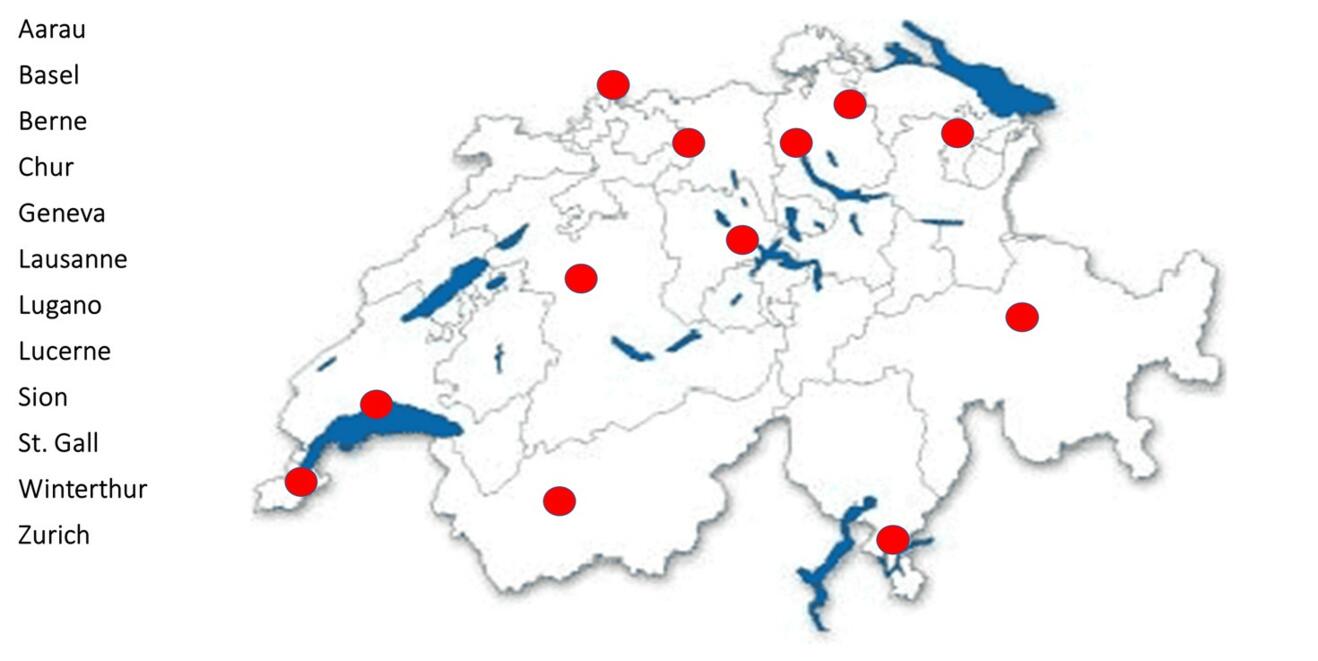
Members from 12 certified Level I Trauma centers form the so-called ”Swiss Trauma Board” (STB). These hospitals, comprising a network covering the entire country, were assigned to treat polytraumatized patients and work closely with both ground and air rescue infrastructure as well as rehabilitation centers. All patients are classified according to the severity and distribution of their injuries according to the globally accepted Injury Severity Score (ISS). Any adult patient with an ISS of 16 or more points, or a severe traumatic brain injury (AIS-Head ≥3), must be documented prospectively in the Swiss Trauma Registry (STR). All 12 certified level I trauma centers are obliged to take part in the STR. Patients with an ISS of 20 points or more, are considered HSM cases and represent the treatment of adult polytraumatized patients, including those that present with severe head injuries.
Chairman Swiss Trauma Registry 2012-2015 Marcel Jakob, Basel
Chairman Swiss Trauma Registry 2015-present Hans-Peter Simmen, Zurich
History
The 12 Swiss trauma centers responsible for treating polytraumatized patients formed the STB as an unregistered partnership with the goal of regulating common interests. These efforts are entirely self‑funded, with activities focused on communicating within the network via regular and scientific meetings, as well as coordinating associated research of the STR. In Switzerland, the STR is primarily a quality control instrument. Therefore, informed consent of patients or their relatives is not required. All patients, without exception, must be included in the registry.
All data are pseudonymized and hosted by Adjumed-Services, Birmensdorferstrasse 47, 8055 Zurich. The STB is responsible for the STR. Its history is long and complicated and goes back to the year 2011 (Figure 1). However, as the proverb says: all good things come to those who wait.
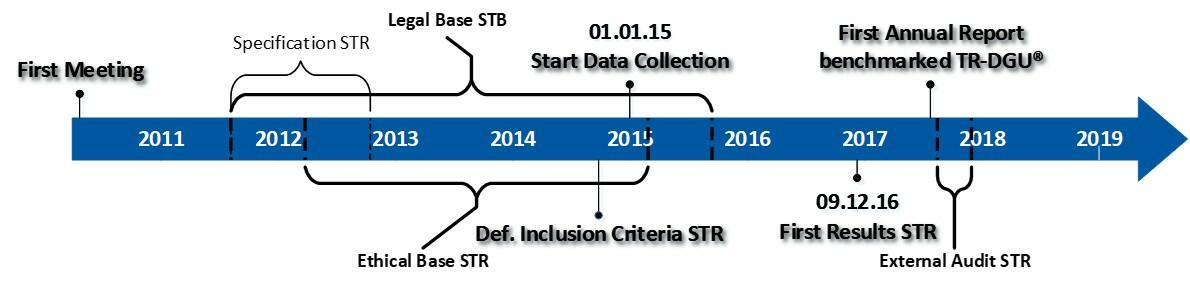
For purposes of international benchmarking, which is also a requirement of the HSM governing body, the STB is pleased to be associated with the German Trauma Registry (GTR, TraumaRegister DGU®). The Akademie der Unfallchirurgie GmbH, Emil-Riedel-Strasse 5, D-80538 München (AUC)®, which runs the TraumaRegister DGU® pools and separately evaluates the data from the 12 Swiss trauma centers. The data is then compared to a comparable group of German trauma centers as defined by the TraumaNetzwerk DGU®.
Early on, there was also a connection with the British TARN (Trauma Audit and Research Network). However, in 2024, Great Britain decided to refrain from sharing data, even in their own country, and TARN is now only used for national interhospital quality control.
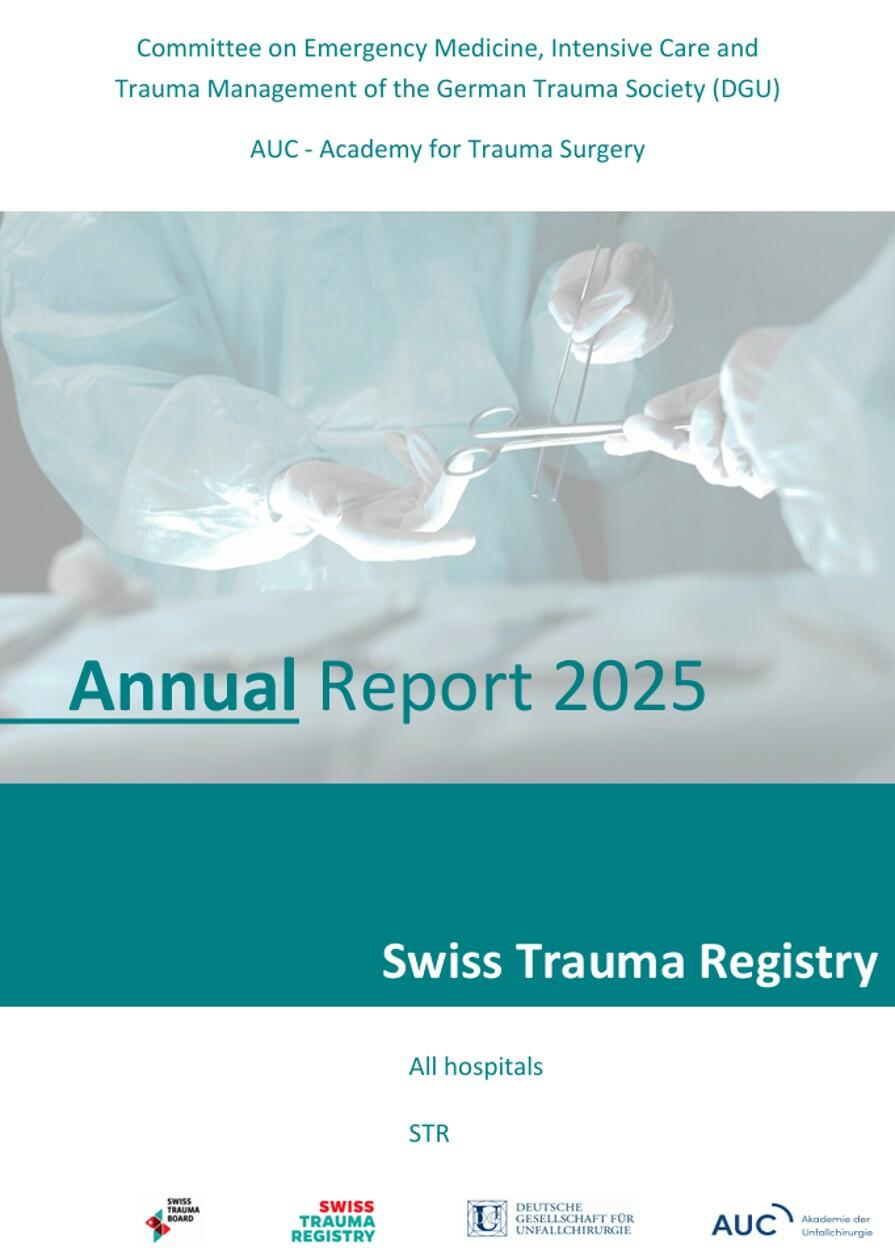
The STR is maintained on Swiss servers by Adjumed-Services and a data transfer to the GTR occurs once yearly for statistical evaluation. The AUC then edits and publishes the annual report of the STR (Figure 3). For further information please visit https://www.auc-online.de/.
As stated above, the association between STR and GTR offers many advantages, as the AUC:
- has been collecting data for 31 years, and the GTR consists of more than half a million documented cases.
- have strong statistical expertise in providing intra-group comparisons between the 12 Swiss Trauma Centers
- provide a robust international benchmark via the more than 600 trauma centers participating in the GTR.
The GTR provides a high-quality data set with which the STR can benchmark itself. This despite the increasing difficulty associated with excessive data privacy practices in Germany, which is facing new, even more stringent EU directives. The challenges are so great that some German institutions have ceased contributing data to the GTR. We are critical of this development as excessive data protection hinders continued improvement in polytrauma management and therefore endangers human life.
Why do we need a trauma registry?
A national trauma registry is the key to quality control in the management of this complex patient population and data are obtained from most phases of patient management:
– Prehospital care
– Emergency department and trauma bay care
– Operative care
– in hospital care, including intensive care
However, due to excessive data protection concerns, follow-up reporting has, up to now, not been permitted.
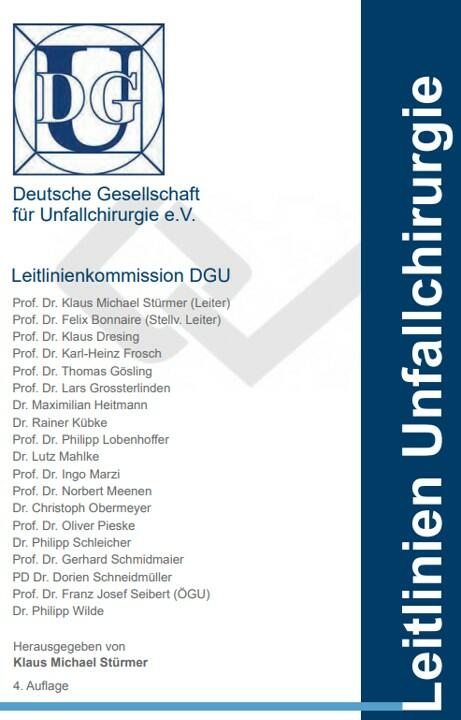
The value of a trauma registry becomes apparent when looking at the GTR, which has provided the basis of more than 400 publications and the German Trauma guidelines (Figure 4) that serve as the foundation of modern European polytrauma care. Every year, more than 2500 patients are included in the STR, of which about 85% have an ISS of 20 or more points (so-called HSM cases). Some key highlights of the STR 2025 data are provided in tables 1 and 2 as well as in figures 5-7.
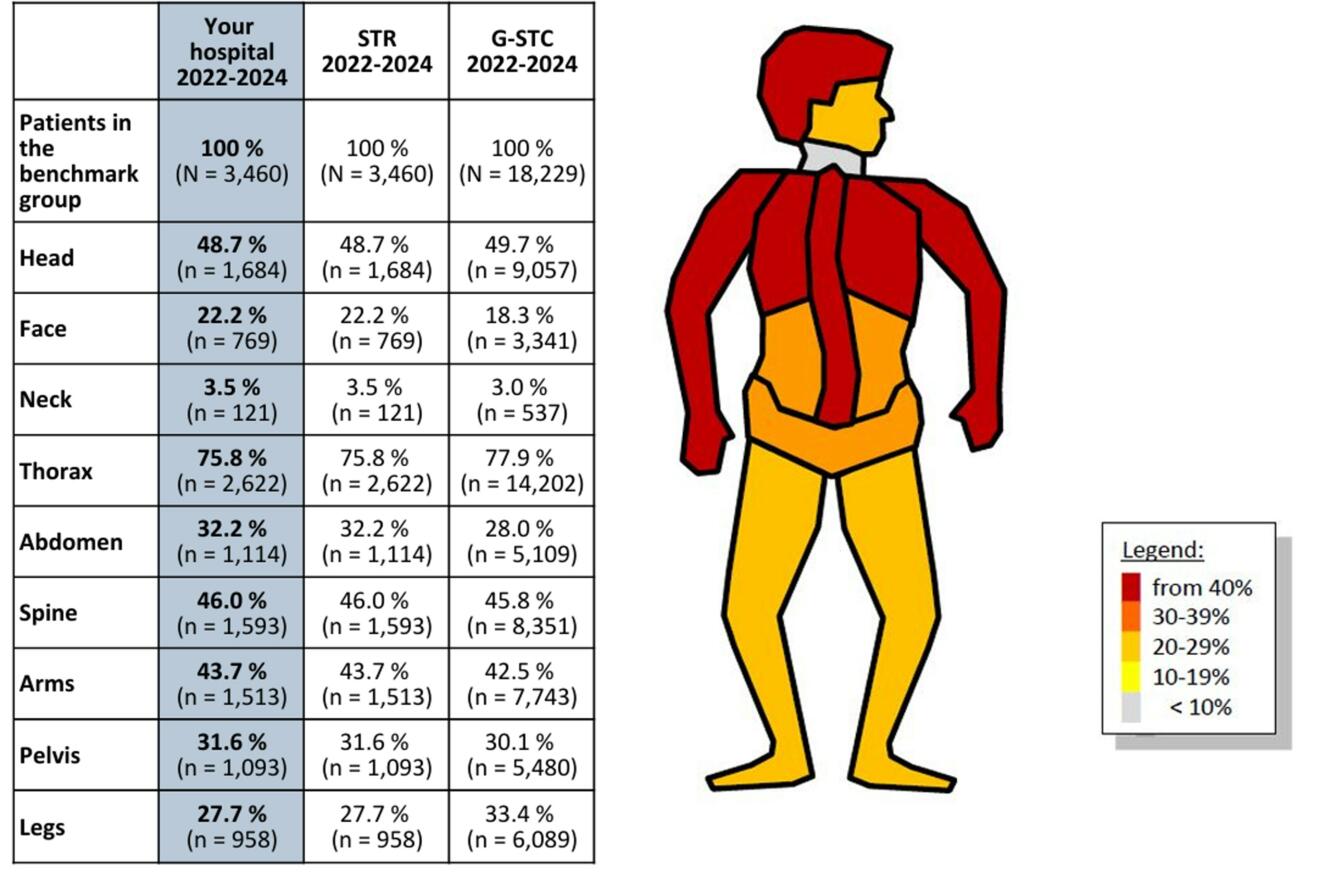
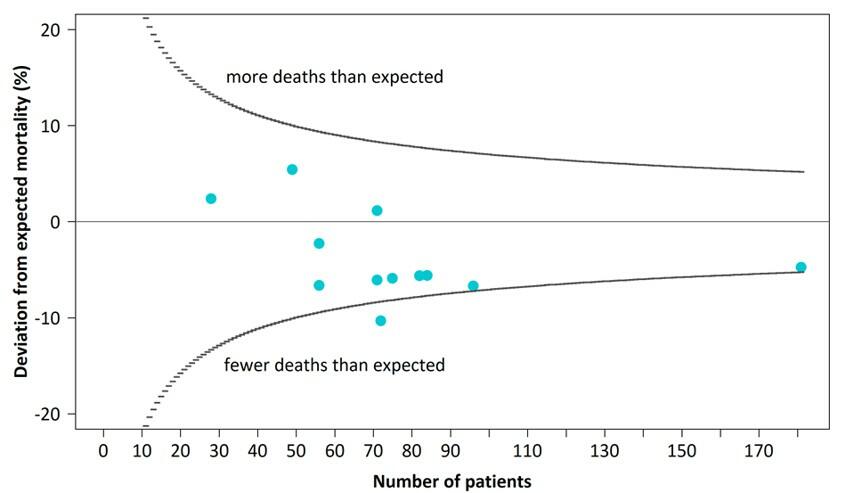
From the annual report 2025. Deviation between the observed mortality and the risk of death prognosis (RISC III) of every hospital participating in the STR with benchmark group cases in the year 2
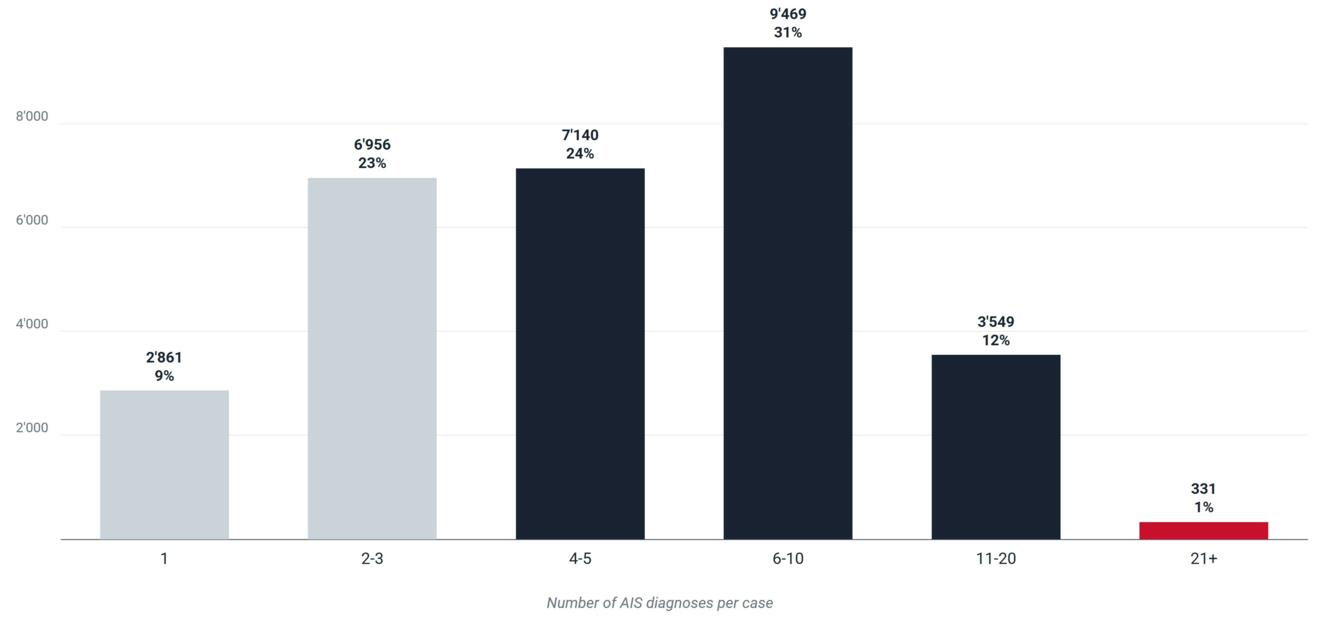
Number of injuries per patient (overview of 12 years STR)
Conclusions
Overall, based on the yearly reports, polytrauma care in Switzerland is on track. Polytrauma management is efficient and the caseload in all 12 trauma centers is high enough to ensure quality, specialized trauma care. Of interest, injury patterns and accident profiles in Switzerland and Germany are identical. Finally, an important aspect of the high quality of trauma care available in Switzerland is due to the efficiency of the Swiss rescue system, as it is coordinated at a national level and the air rescue network, provided primarily via REGA, is one of the best systems in the world. As a result, time between accident and in-hospital arrival averages just 60 minutes for polytraumatized patients in Switzerland.
Currently, the STR consists of more than 30,000 well-documented polytrauma cases which are eligible for scientific analysis. According to our publication guidelines, at least one author must be a STB member. While the data are available for STB members only, colleagues interested in STR data for scientific analysis may contact a member of the STB. All STR study protocols are evaluated by the STB review board consisting of the Chairman ex officio and two additional STB members elected by the board.
Literature including selected papers written using STR data
https://www.auc-online.de/ Internet: Leitlinienübersicht | DGU
Simmen HP, Jensen KO, Sprengel K, Pape HC. Polytraumaversorgung als Bereich der hochspezialisierten Medizin. SCHWEIZERISCHE ÄRZTEZEITUNG (2021);102(25):836–838
Magyar CTJ, Bednarsky P, Jakob DA, Schnüriger B, and «The Swiss Trauma Registry». Severe penetrating trauma in Switzerland: first analysis of the Swiss Trauma Registry STR. European Journal of Trauma and Emergency Surgery (2022) 48: 3837-3846
Lavanchy JL, Delafontaine L, Haltmeier T, Bednarsky P, Schnüriger B, and “The Swiss Trauma Registry”. Increased hospital treatment volume of splenic injury predicts higher frates of successful non-operative management and reduces hospital length of stay: a Swiss Trauma Registry analysis. European Journal of Trauma and Emergency Surgery (2022) 48: 133-140
Costa A, Carron PN, Zingg T, Roberts I, Ageron FX and “The Swiss Trauma Registry”. Early identification of bleeding in trauma patients: external validation of traumatic bleeding scores in the Swiss Trauma Registry. Critical Care (2022) 26: 296
Hasler RM, Rauer T, Pape HC, Zwahlen M. and «The Swiss Trauma Registry». Inter-hospital transfer of polytrauma and severe traumatic brain injury patients: Retrospective nationwide cohort study using data from the Swiss Trauma Register. PLOSONE| https://doi.org/10.1371/journal.pone.0253504
Balet L, Ageron FX, Pasquier M, Zingg T and The Swiss Trauma Registry. Performance Assessment of Out-of-Hospital Use of Pelvic Circumferential Compression Devices for Severely Injured Patients in Switzerland: A Nationwide Retrospective Cross-Sectional Study. J. Clin. Med. (2023) 12, 5509. https://doi.org/10.3390/jcm12175509
Martin M, Micallef P, Judd S, Exadaktylos A, Jakob DA, Pietsch U, and the Swiss Trauma Registry. Characteristics of severely injured trauma patients transported by helicopter emergency medical services in Switzerland: a retrospective cohort study. Swiss Med Wkly (2025);155:4502
Hejrati N, Stengel FC, Fehlings MG, Maschmann C, Stienen MN, Jensen KO and the Swiss Trauma Registry. Spinal cord injury in severely injured patients: results from the Swiss Trauma Registry. Scandinavian Journal of Trauma, Resuscitation and Emergency Medicine (2025) 33:103
Müller M, Hautz W, Louma Y, Knapp J, Schnüriger B, Simmen HP, Pietsch U, Jakob DA, and the Swiss Trauma Board. Accuracy between prehospital and hospital diagnosis in helicopter emergency medical services and its consequences for trauma care. European Journal of Trauma and Emergency Surgery https://doi.org/10.1007/s00068-024-02505-y