



According to international guidelines, surveillance, consisting in the standardized follow-up of patients who underwent surgical procedures for establishing SSI rates and feeding them back to stake holders, constitutes an important measure for preventing SSI and its implementation is highly recommended.3,4
History and legal basis
SSI surveillance was the first healthcare-associated infections (HAI) incidence surveillance module introduced on a large scale in Switzerland. Developed in Valais in 1998, it was implemented in agreement with the local surgeons first in the hospitals of Romandie, Tessin and Emmental before being transferred to Swissnoso, the National center for infection prevention (www.swissnoso.ch), in 2010 and becoming mandatory and nationwide in 2011 as part of the outcome indicators of the ANQ, the Center of excellence for quality measurement in hospitals and clinics (www.anq.ch).
Until 2011, hospitals participated on a voluntary basis. Since then, the implementation and the funding of the surveillance program are governed by the national contract for quality of the ANQ (www.anq.ch/de/nationaler-qualitaetsvertrag-anq/) signed by by H+ (National Association of Swiss Hospitals and Clinics), the health insurances and the cantons under the federal law (Bundesgesetz über die Krankenversicherung – KVG, Loi fédérale sur l’assurance-maladie – LAMal).
Methodology
The surveillance methods are available on the Swissnoso website (http://www.swissnoso.ch/module/ssi-surveillance/material/handbuch-formulare) and have been described in details in former publications.5,6 They are similar to those of the US Centers for disease control and prevention (CDC) with particular efforts put on post-discharge follow-up and periodic onsite validation audits. Briefly, each hospital has to choose every year from a pool of 13 operations (see Table 1) and to monitor at least three of them, including colon surgery in addition to pediatric appendectomies, which are mandatory for hospitals performing these operations.
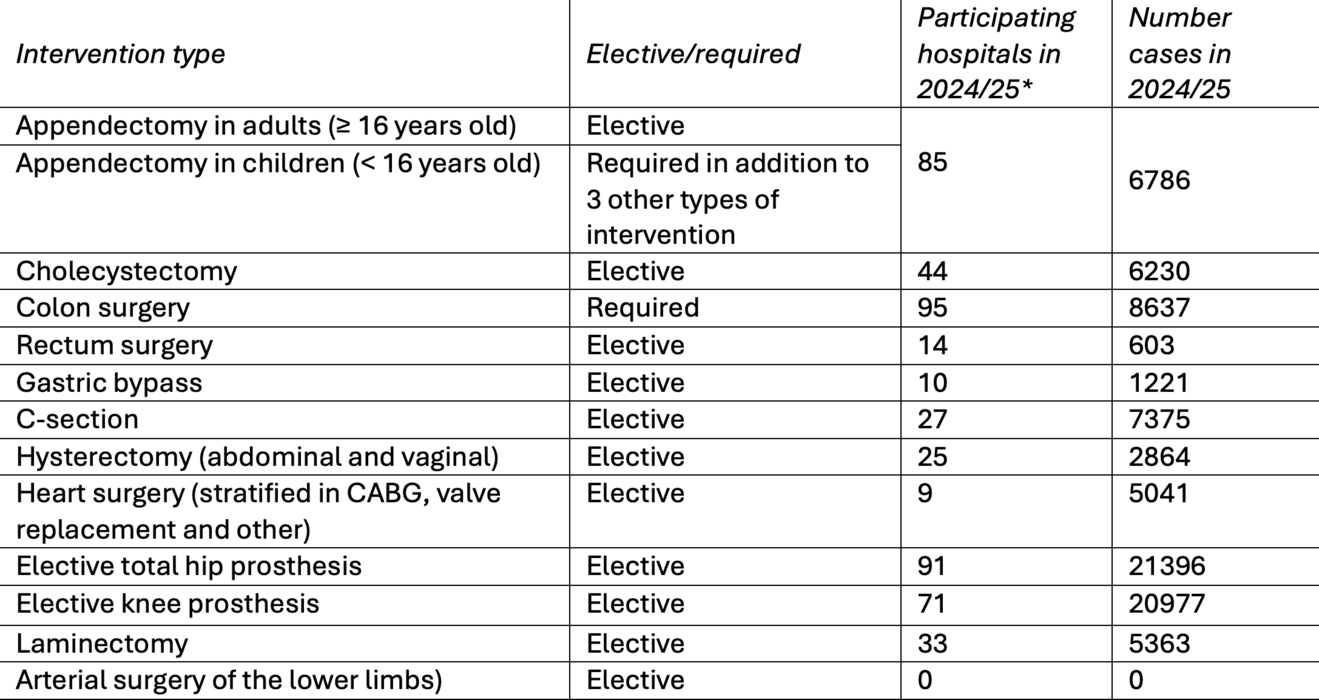
Table 1: List of interventions for SSI Surveillance and freedom of choice
Patients are followed-up for one month (12 months, 3 months since 2021, for operations with implantation of foreign bodies) by specifically trained infection control nurses and infectious diseases physicians using chart reviews and phone or online interviews with the patients and attending physicians. SSIs are diagnosed using the CDC SSI definitions.7 Data are entered manually using online case report forms by most hospitals but a direct transfer through a web service is possible for hospitals ready for it. SSI rates are calculated by operation for each hospital (plus each surgeon until 2009) globally and for superficial incisional infections (until 2025), deep incisional infections, and organ/space infections. Comparisons are performed between hospitals for each operation using statistical methods (e.g. logistic regression models) allowing the estimation of risks adjusted for the contamination class, the American society of anesthesiologists (ASA) score, and the duration of the operation.
Reporting and results
SSI rates and benchmarking
Each hospital (and each surgeon until 2009) gets a yearly report that describes in detail its own SSI rates stratified by operations, and different risk factors as well as its temporal trends and its statistically adjusted risk for SSI as compared to the other participating hospitals (and previously other surgeons).
In addition, yearly general reports and SSI adjusted rates of each hospital are openly published on the ANQ website since 2011 together with various information as shown in figure 1 with the example of colon surgery (www.anq.ch/de/fachbereiche/akutsomatik/messergebnisse-akutsomatik).
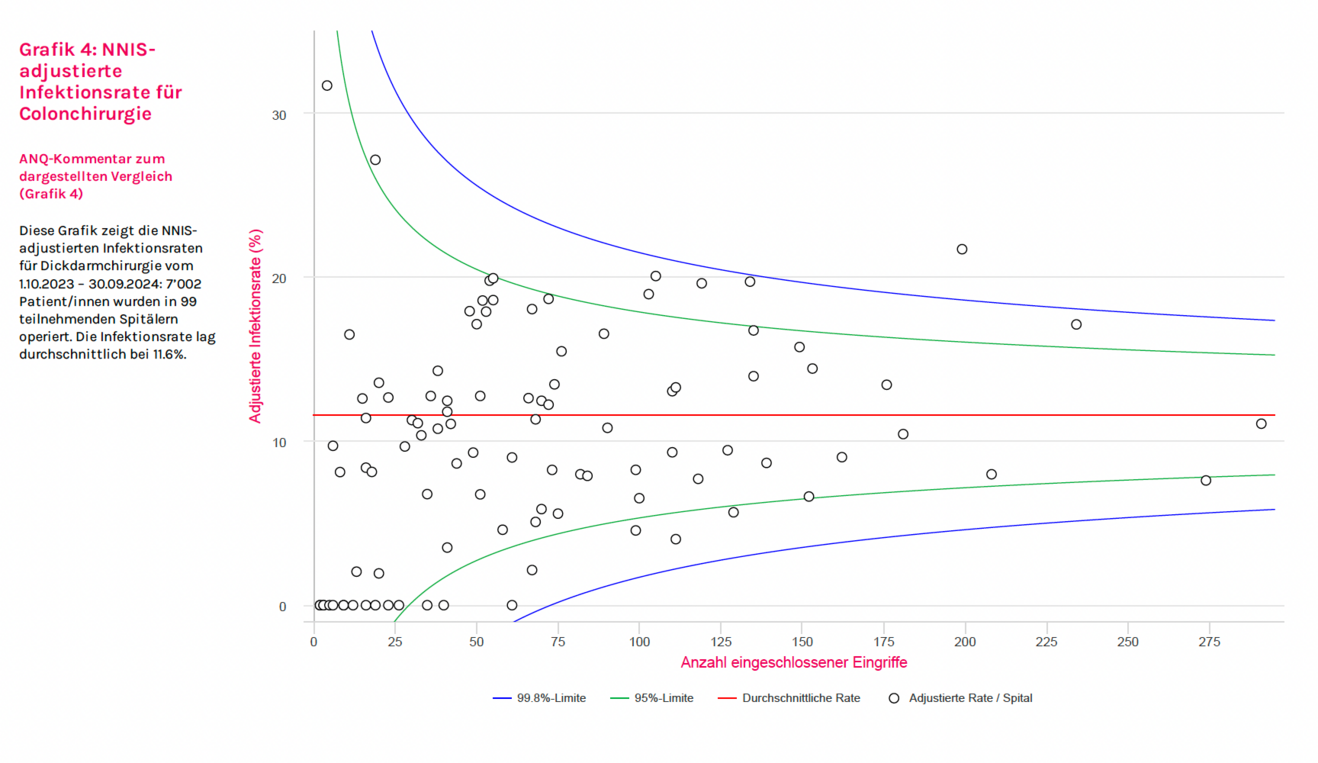
The general results of SSI surveillance constitute also a part of the annual report on healthcare-associated infections published by Swissnoso on mandate of the Federal Office of Public Health (www.swissnoso.ch/guidelines-publikationen/annual-reports-hai).
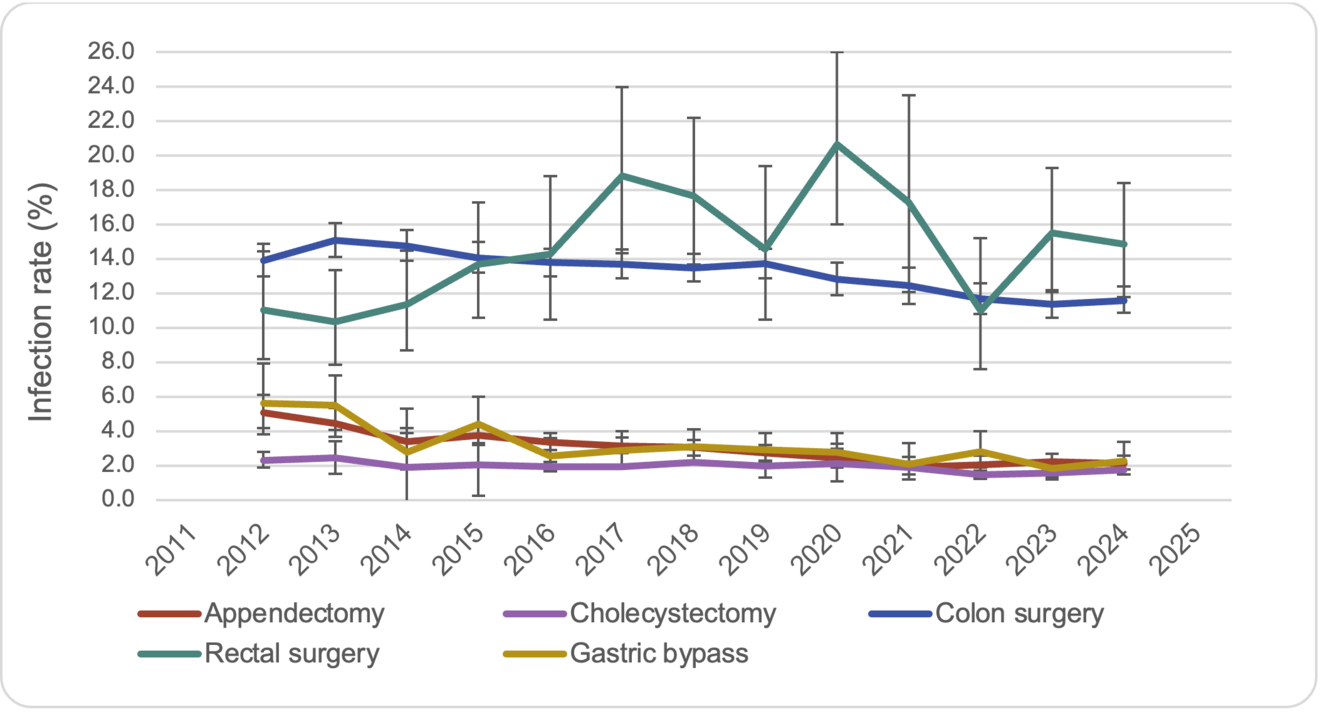
Figure 2: Temporal trend of SSI rates for visceral surgery
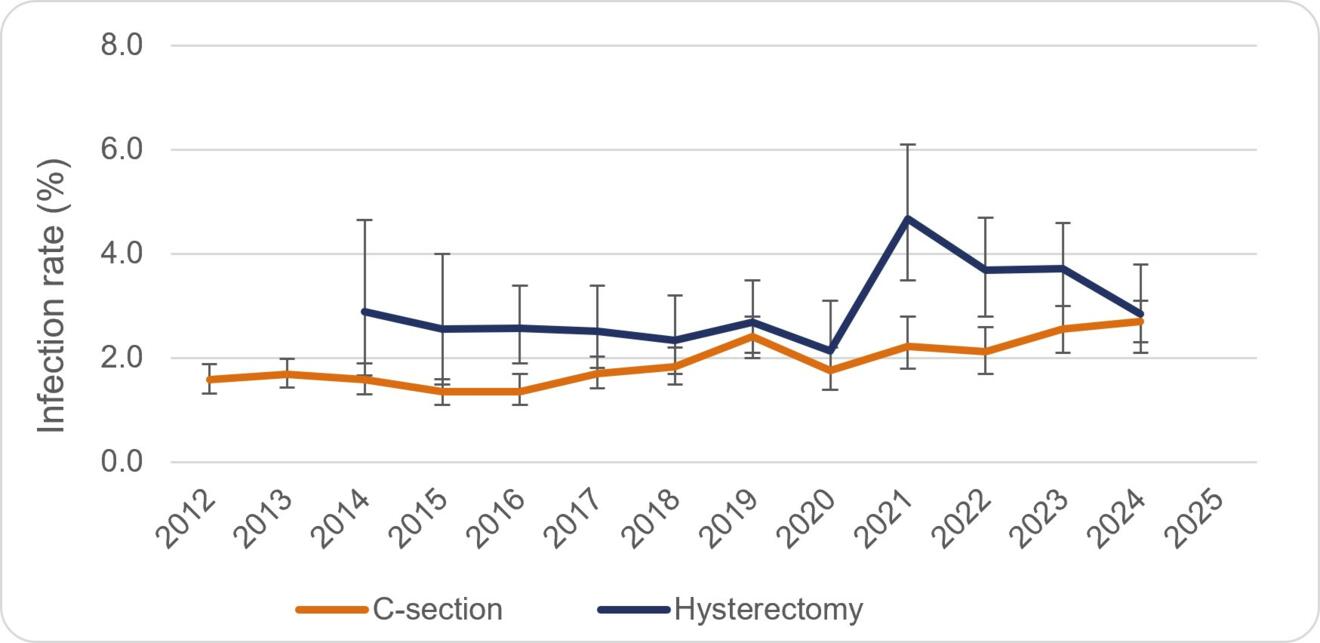
Figure 3: Temporal trend of SSI rates for C-section and hysterectomy
Figures 2 to 5 show the aggregated temporal trends of SSI rates for various operations in Switzerland since 2011. SSI rates have decreased significantly over time for 10 operations, i.e. appendectomies, cholecystectomies, colon surgery, gastric bypasses, cardiac surgery including coronary bypasses and valve procedures, hip replacements, knee replacements, and laminectomies with implants. In contrast, temporal trends show a significant increase for rectal surgery, hysterectomies, and C-sections. These trends occurred while the number of patients with an ASA score >=3 increased in a significant statistical manner for most interventions as did their age for appendectomy, cholecystectomy, colon surgery, C-section, laminectomy without implant, hip, and knee arthroplasty.
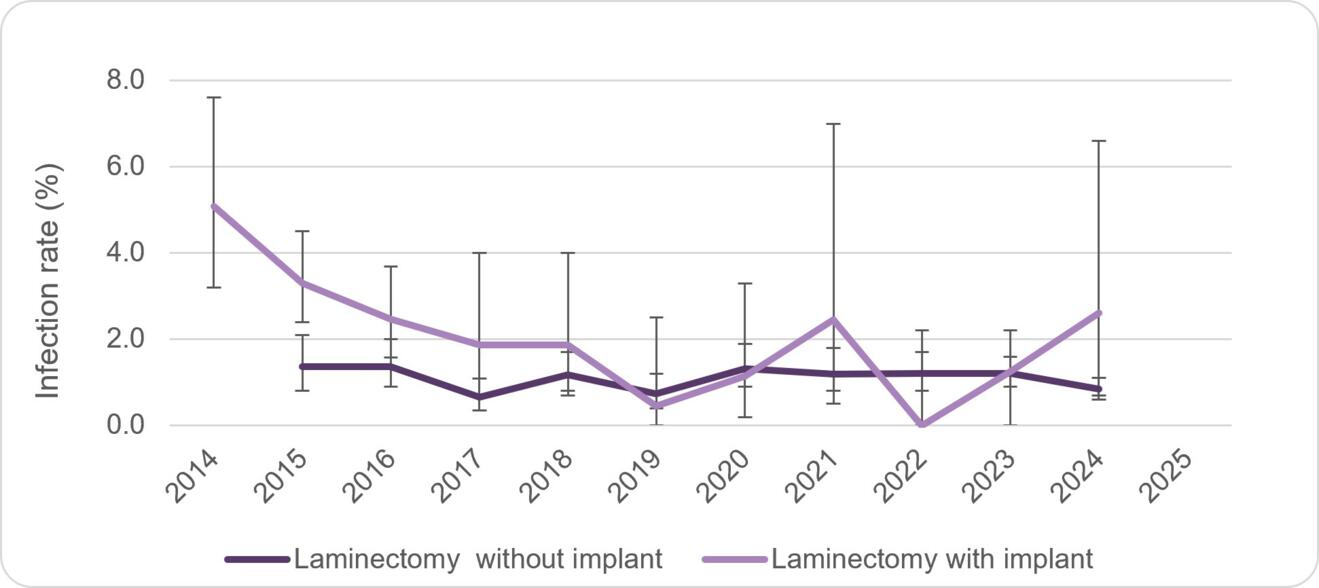
Figure 4: Temporal trend of SSI rates for laminectomy
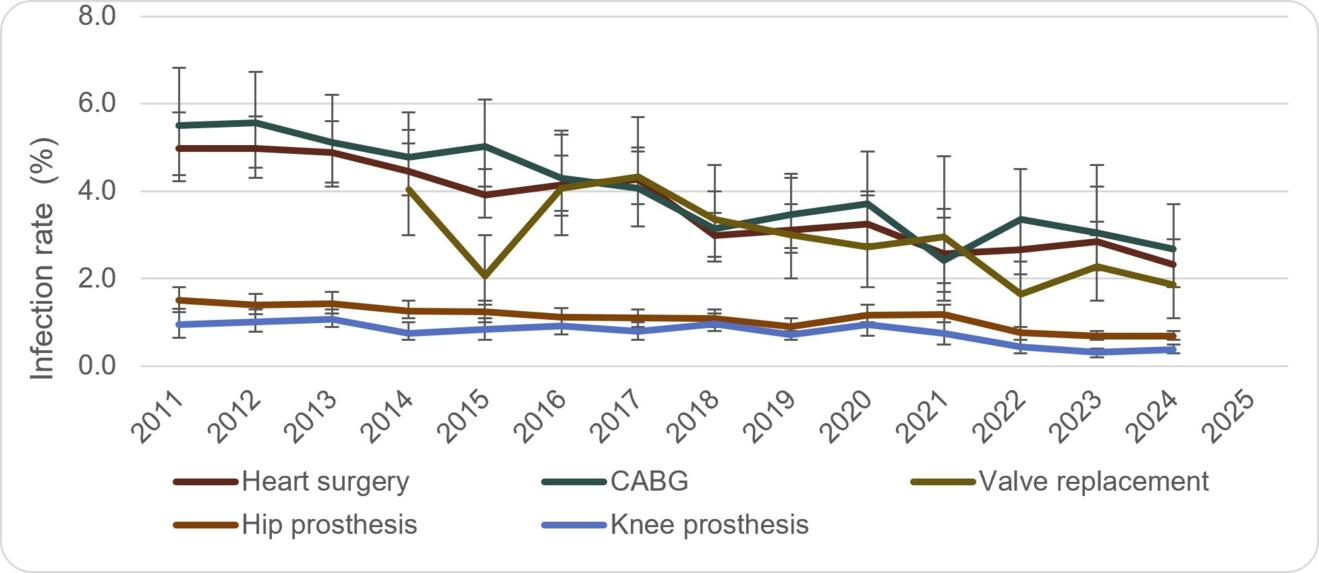
Figure 5: Temporal trend of SSI rates for heart surgery and hip and knee prosthesis
These results are shown and discussed in details in the 2 above-mentioned reports. Of note, in 2023-2024, 36% of SSI necessitated a new admission and 51.5% a new intervention.
Quality control
Periodic onsite visits by trained Swissnoso personnel are organized to test the homogeneity of the surveillance procedures and diagnosis criteria between hospitals. Using a standardized scoring system, each hospital gets a mark varying from 0 to 50, visible on the ANQ website together with SSI rates and other information. This allows quality monitoring, comparisons to other hospitals and corrective measures when necessary. As shown in Figure 6, the evolution of the distribution of scores through successive visits corresponds to an improvement of quality over time.
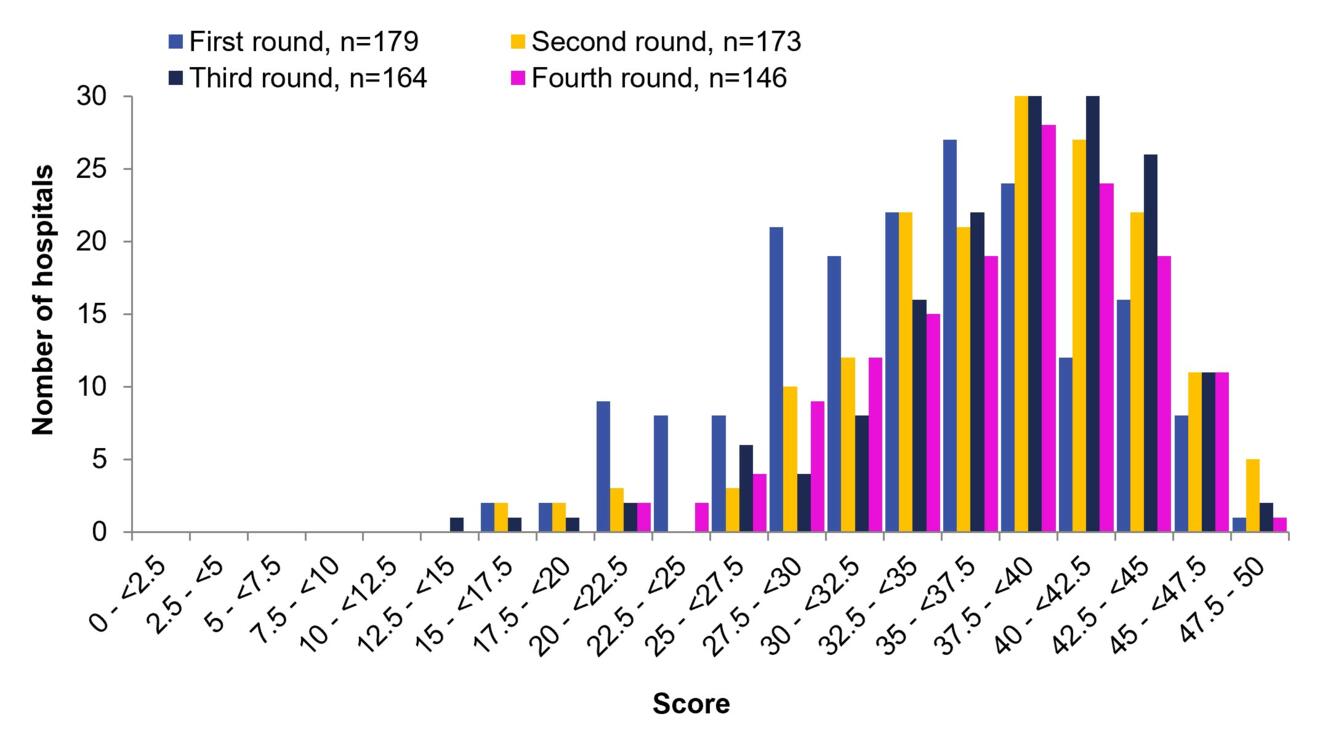
Figure 6: Distribution of the scores that hospitals and clinics received during the various audit visits
Research and peer-reviewed publications
The Swiss SSI surveillance program gave rise to various scientific hypotheses that were tested using its anonymized database (currently about 800,000 operations included) for observational studies. A number of resulting research papers were published in peer-reviewed journals.5,6,8-27
Analyses were performed to determine the independent association between specific parameters and SSI such as laparoscope use in digestive surgery (associated with a lower risk of SSI),8 daytime for cardiac surgery (no influence found on SSI and mortality),9 environmental temperature and heatwaves in hip and knee arthroplasties (higher SSI rates in the summertime)10, and air quality in the operating room (better ventilation properties as assessed by a newly developed index associated with lower rates of superficial and deep incisional SSI in orthopedic and cardiac surgery).11 Of note, surgeons were confirmed as playing an important role for the prevention of SSI in colon surgery without correlation found between their individual adjusted risk and their self-reported adherence to guidelines or time since their board certification.12
Other articles addressed questions linked to the surveillance system itself. Shortening the follow-up from 12 to 3 months for operations with implantation of foreign bodies was shown to have an acceptable impact on SSI rates.13 Attempts were made to develop prediction models for SSI.14,15 Importantly, a study found that a lesser quality, as measured during the onsite visits in hospitals, was associated with lower SSI rates, suggesting that the quality of surveillance is an important parameter to consider when establishing comparisons between hospitals.16 Although a multinational study that included the Swiss program showed a general decrease in SSI rates over time when participating in a surveillance system,17 rates were still deemed too high in Switzerland.5,18 A complementary program was thus developed, aiming at enhancing and monitoring the adherence of hospitals to preventive measures (www.swissnoso.ch/module/ssi-intervention). Preliminary results suggested its effectiveness.19
Surgical antibiotic prophylaxis (SAP) is one of the most effective ways to prevent SSI.3,4 Studies using the surveillance data addressed various still open questions. The best timing for SAP was found to be within one hour prior the incision, ideally within 10 to 25 minutes, suggesting that it could be easily done at the patient’s arrival in the operating room.20,21 A study on 55’901 C-sections found a trend, but did not confirm a statistically increased SSI risk for the mother if SAP was given after umbilical cord clamping compared to before incision.22 Studies also found that patients undergoing low-risk cholecystectomies may benefit from routine SAP,23 that doubling the dose of cefuroxime for patients weighting more than 80 kg is not associated with lower SSI rates,24 that cefuroxime plus metronidazole prevents SSI better than amoxicillin/clavulanic acid in colorectal surgery and pediatric appendectomies,25,26 and that non-beta-lactam antibiotics (e.g. clindamycin) were associated with higher odds of SSI than beta-lactam antibiotics (e.g. cefazoline or cefuroxime).27
Current and future developments
Surveillance programs have been shown to be useful for the prevention of SSI and are implemented in many countries.7,17,28-30 However, they are demanding for hospitals in terms of human resources. Thus, Swissnoso and ANQ made already some changes aiming at lowering the necessary workload, i.e. shortening the follow-up from 12 to 3 months for operations with implantation of foreign bodies in 2021, and discontinuing the inclusion of superficial incisional infections and introducing more user-friendly case report forms in 2026). In addition, the merging of the Swissnoso SSI surveillance with the Swiss National Joint Registry (SIRIS) (www.siris-implant.ch) anticipated in 2027 will substantially facilitate the work of infection control teams for the follow-up of hip and knee arthroplasties.
According to a mandate of the Federal commission for quality (Eidgenössische Qualitätskommission – EQK, Commission fédérale pour la qualité – CFQ), Swissnoso will develop in the coming years a national database for healthcare-associated infections with automated transfer of standardized data from hospitals, a progress that will greatly diminish the necessary workload for surveillance. Moreover, new developments for automated or semi-automated detection of SSI through algorithms and machine learning could occur in a quite near future and contribute to further alleviate the workload of hospitals and reinforce the agreement for the diagnosis of SSI between hospitals.31,32
Another important future goal is to directly connect intervention procedures, such as Staphylococcus aureus decolonization or gut decontamination to the SSI Surveillance database and thus consider them an integral part of SSI Surveillance.
Finally, new hospital reports will include from 2027 on an online interactive access and operation-specific risk adjustment taking more confounding factors into account such as emergency, body mass index and cancer.
Conclusion
As in many countries and as recommended by international guidelines, a surgical site surveillance program was developed in Switzerland 28 years ago before becoming mandatory in 2011 for all hospitals with surgical activities. It is still evolving to facilitate its practical implementation but contributed already significantly to the fight against healthcare-associated infections and to test scientific hypotheses. It revealed a decrease in SSI rates over time for 10 of 13 included surgical procedures but also that efforts are still needed. This motivated the adjunction of an SSI-intervention module aiming at monitoring the adherence to proven prevention measures, thus adding process indicators to outcome indicators in order to better implement the PDCA (plan, do, check, act) principles of quality management in hospitals.
1. Kirkland KB, Briggs JP, Trivette SL, Wilkinson WE, Sexton DJ. The impact of surgical-site infections in the 1990s: Attributable mortality, excess length of hospitalization, and extra costs. Infect Control Hosp Epidemiology. 1999;20(11):725-30.
2. Badia JM, Casey AL, Petrosillo N, Hudson PM, Mitchell SA, Crosby C. Impact of surgical site infection on healthcare costs and patient outcomes: a systematic review in six European countries. J Hosp Infect. 2017;96(1):1-15.
3. World Health Organization. Global guidelines for the prevention of surgical site infection, second edition. Geneva: World Health Organization; 2018. Available from: www.who.int/publications/i/item/9789241550475#ns
4. Calderwood MS, Anderson DJ, Bratzler DW, et al. Strategies to prevent surgical site infections in acute-care hospitals: 2022 Update. Infect Control Hosp Epidemiology. 2023;44(5):695-720.
5. Troillet N, Aghayev E, Eisenring M-C, Widmer AF. First results of the Swiss national surgical site infection surveillance program: Who seeks shall find. Infect Control Hosp Epidemiology. 2017;38(06):697-704.
6. Kuster SP, Eisenring M-C, Sax H, Troillet N. Structure, process, and outcome quality of surgical site infection surveillance in Switzerland. Infect Control Hosp Epidemiology. 2017;38(10):1172-81.
7. National Healthcare Safety Network. Surgical site infection event (SSI). January 2026. Available from: www.cdc.gov/nhsn/pdfs/pscmanual/9pscssicurrent.pdf
8. Romy S, Eisenring MC, Bettschart V, Petignat C, Francioli P, Troillet N. Laparoscope use and surgical site infections in digestive surgery. Ann Surg. 2008;247(4):627-32.
9. Sommerstein R, Marschall J, Kuster SP, Troillet N, Carrel T, Eckstein FS, Widmer AF; Swissnoso. Cardiovascular daytime varying effect in cardiac surgery on surgical site infections and 1-year mortality: A prospective cohort study with 22,305 patients. Infect Control Hosp Epidemiol. 2019;40(6):727-728.
10. Damonti L, Atkinson A, Fontannaz L, Burnham JP, Jent P, Troillet N, Widmer A, Marschall J; for Swissnoso; National Center for Infection Control. Influence of environmental temperature and heatwaves on surgical site infection after hip and knee arthroplasty: a nationwide study. J Hosp Infect. 2023;135:125-131.
11. Surial B, Atkinson A, Külpmann R, Brunner A, Hildebrand K, Sicre B, Troillet N, Widmer A, Rolli E, Maag J, Marschall J. Better operating room ventilation as determined by a novel ventilation index is associated with lower rates of surgical site infections. Ann Surg. 2022;276(5):e353-e360.
12. Hübner M, Diana M, Zanetti G, Eisenring MC, Demartines N, Troillet N. Surgical site infections in colon surgery: the patient, the procedure, the hospital, and the surgeon. Arch Surg. 2011;146(11):1240-5.
13. Piezzi V, Atkinson A, Jent P, Troillet N, Zwahlen M, Widmer A, Marschall J. Focusing on the follow-up for detecting surgical site infections after total joint arthroplasty and cardiac surgery: A cohort study from the Swiss national surveillance system, 2009-2018. Infect Control Hosp Epidemiol. 2022;43(12):1951-1952.
14. Gervaz P, Bandiera-Clerc C, Buchs NC, Eisenring MC, Troillet N, Perneger T, Harbarth S. Scoring system to predict the risk of surgical-site infection after colorectal resection. Br J Surg. 2012;99(4):589-95.
15. Grant R, Aupee M, Buchs NC, Cooper K, Eisenring MC, Lamagni T, Ris F, Tanguy J, Troillet N, Harbarth S, Abbas M. Performance of surgical site infection risk prediction models in colorectal surgery: external validity assessment from three European national surveillance networks. Infect Control Hosp Epidemiol. 2019;40(9):983-990.
16. Atkinson A, Eisenring MC, Troillet N, Kuster SP, Widmer A, Zwahlen M, Marschall J. Surveillance quality correlates with surgical site infection rates in knee and hip arthroplasty and colorectal surgeries: A call to action to adjust reporting of SSI rates. Infect Control Hosp Epidemiol. 2021;42(12):1451-1457.
17. Abbas M, de Kraker MEA, Aghayev E, Astagneau P, et al. Impact of participation in a surgical site infection surveillance network: results from a large international cohort study. J Hosp Infect. 2019;102(3):267-276.
18. Staszewicz W, Eisenring MC, Bettschart V, Harbarth S, Troillet N. Thirteen years of surgical site infection surveillance in Swiss hospitals. J Hosp Infect. 2014;88(1):40-47.
19. Eder M, Sommerstein R, Szelecsenyi A, Schweiger A, Schlegel M, Atkinson A, Kuster SP, Vuichard-Gysin D, Troillet N, Widmer AF; for Swissnoso. Association between the introduction of a national targeted intervention program and the incidence of surgical site infections in Swiss acute care hospitals. Antimicrob Resist Infect Control. 2023;12(1):134.
20. Sommerstein R, Atkinson A, Kuster SP, Thurneysen M, Genoni M, Troillet N, Marschall J, Widmer AF; Swissnoso. Antimicrobial prophylaxis and the prevention of surgical site infection in cardiac surgery: an analysis of 21 007 patients in Switzerland. Eur J Cardiothorac Surg. 2019;56(4):800-806.
21. Sommerstein R, Troillet N, Harbarth S, de Kraker MEA, Vuichard-Gysin D, Kuster SP, Widmer AF; Swissnoso group. Timing of cefuroxime surgical antimicrobial prophylaxis and its association with surgical site infections. JAMA Netw Open. 2023;6(6):e2317370.
22. Sommerstein R, Marschall J, Atkinson A, Surbek D, Dominguez-Bello MG, Troillet N, Widmer AF. ; Swissnoso. Antimicrobial prophylaxis administration after umbilical cord clamping in cesarean section and the risk of surgical site infection: a cohort study with 55,901 patients. Antimicrob Resist Infect Control. 2020;9(1):201.
23. Florinett L, Widmer A, Troillet N, Beldi G, Von Flüe M, Harbarth S, Sommerstein R; Swissnoso. Surgical Antimicrobial Prophylaxis in low-risk cholecystectomies is associated with fewer surgical site infections: nationwide cohort study in Switzerland. Ann Surg. 2026;283(1):136-141.
24. Sommerstein R, Atkinson A, Kuster SP, Vuichard-Gysin D, Harbarth S, Troillet N, Widmer AF; Swissnoso Network. Association between antimicrobial prophylaxis with double-dose cefuroxime and surgical site infections in patients weighing 80 kg or more. JAMA Netw Open. 2021;4(12):e2138926.
25. Stavropoulou E, Atkinson A, Eisenring MC, Fux CA, Marschall J, Senn L, Troillet N. Association of antimicrobial perioperative prophylaxis with cefuroxime plus metronidazole or amoxicillin/clavulanic acid and surgical site infections in colorectal surgery. Antimicrob Resist Infect Control. 2023;12(1):105.
26. Bielicki I, Schmid H, Atkinson A, Kahlert CR, Berger C, Troillet N, Marschall J, Bielicki JA; Swissnoso. Association between perioperative prophylaxis with cefuroxime plus metronidazole or amoxicillin/clavulanic acid and surgical site infections in paediatric uncomplicated appendectomy: a Swiss retrospective cohort study. Antimicrob Resist Infect Control. 2023;12(1):106.
27. Largiadèr S, Berthod D, Widmer A, Troillet N, Jackson H, Perdrieu C, Harbarth S, Sommerstein R; Swissnoso Group. β-lactam vs non-β-lactam antimicrobial prophylaxis and surgical site infection. JAMA Netw Open. 2025;8(10):e2540809.
28. European Centre for Disease Prevention and Control. Healthcare-associated infections: surgical site infections. In: ECDC. Annual epidemiological report for 2023. Stockholm: ECDC; June 2026. Available from: www.ecdc.europa.eu/sites/default/files/documents/AER-20251013-SSI.pdf
29. Rosenthal VD, Ruijie Y, Jin Z, Alkhawaja SA, Sowar SFM, et al. Surgical site infection rates in five middle eastern countries: international nosocomial infection control consortium findings. Oman Med J. 2024;39(6):e689.
30. Nakhleh H, Fatokun BS, Nakyanzi H, Mshaymesh S, Wellington J, Uwishema O. Surgical site infections in sub-Saharan Africa: epidemiology, risk factors, and prevention strategies. Ann Med Surg (Lond).2025;87(6):3388-3392.
31. Denkel LA, Arnaud I, Brekelmans M, Puig-Asensio M, Amin H, Gubbels S, Iversen P, Abbas M, Presterl E, Astagneau P, van Rooden S; PRAISE SSI working group.
Automated surveillance for surgical site infections (SSI) in hospitals and surveillance networks-expert perspectives for implementation. Antimicrob Resist Infect Control. 2024;13(1):155.
32. Birgand G, Lepelletier D, Baron G, Barrett S, Breier AC, Buke C, Markovic-Denic L, Gastmeier P, Kluytmans J, Lyytikainen O, Sheridan E, Szilagyi E, Tacconelli E, Troillet N, Ravaud P, Lucet JC. Agreement among healthcare professionals in ten European countries in diagnosing case-vignettes of surgical-site infections. PLoS One. 2013;8(7):e68618.